


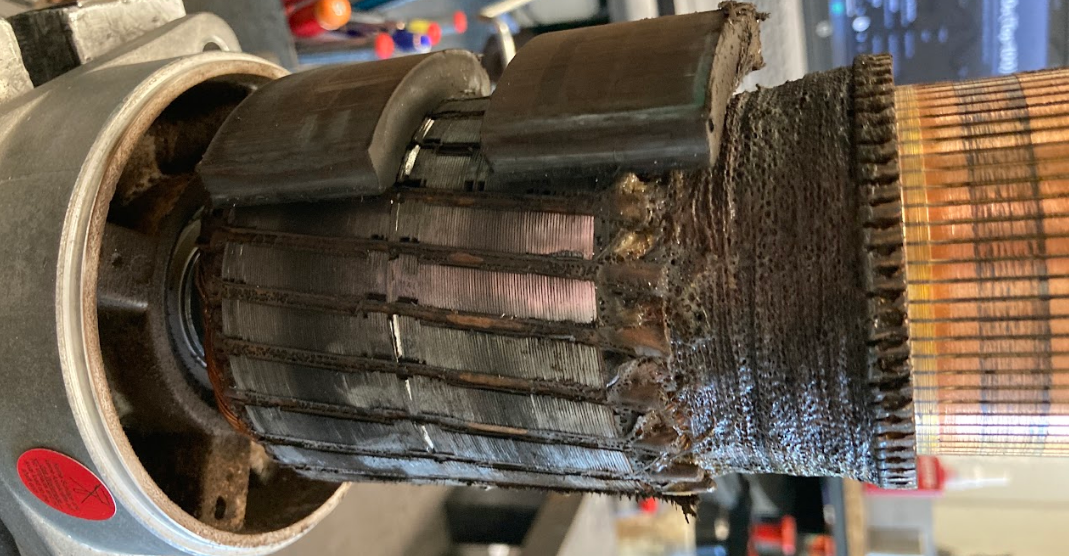
A permanent magnet DC motor arrived at the workshop, seized and unusable. Disassembly revealed that two magnets had detached from the stator and stuck to the rotor. The rotor could no longer rotate, the winding was burnt-out, and the rotor stack laminations were damaged.
The motor had been in operation for over twenty years.
What we found
The material was not damaged after more than twenty years of operation. In the stator, the spot where the magnet was missing remained empty, with a visible trace of the old adhesive.
The rotor bore the consequences. The rotor stack laminations were damaged where they dragged against the magnets, and the winding was burnt-out.
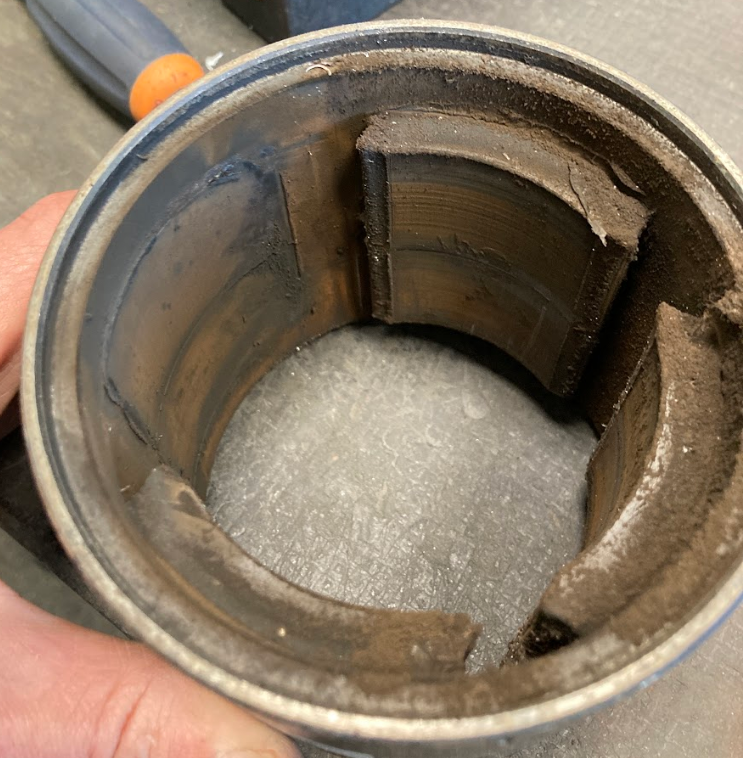
The magnets themselves were fine. Only the adhesive bond between the magnet and the stator housing had failed.
What we did
- Removed the old winding and damaged rotor stack laminations
- Assembled a new lamination stack
- Rewound the rotor
- Cleaned the original magnets and re-glued them to the stator
- Assembled, balanced, and tested the rotor
The motor is ready for operation again. We provide a 12-month warranty on the rewinding.
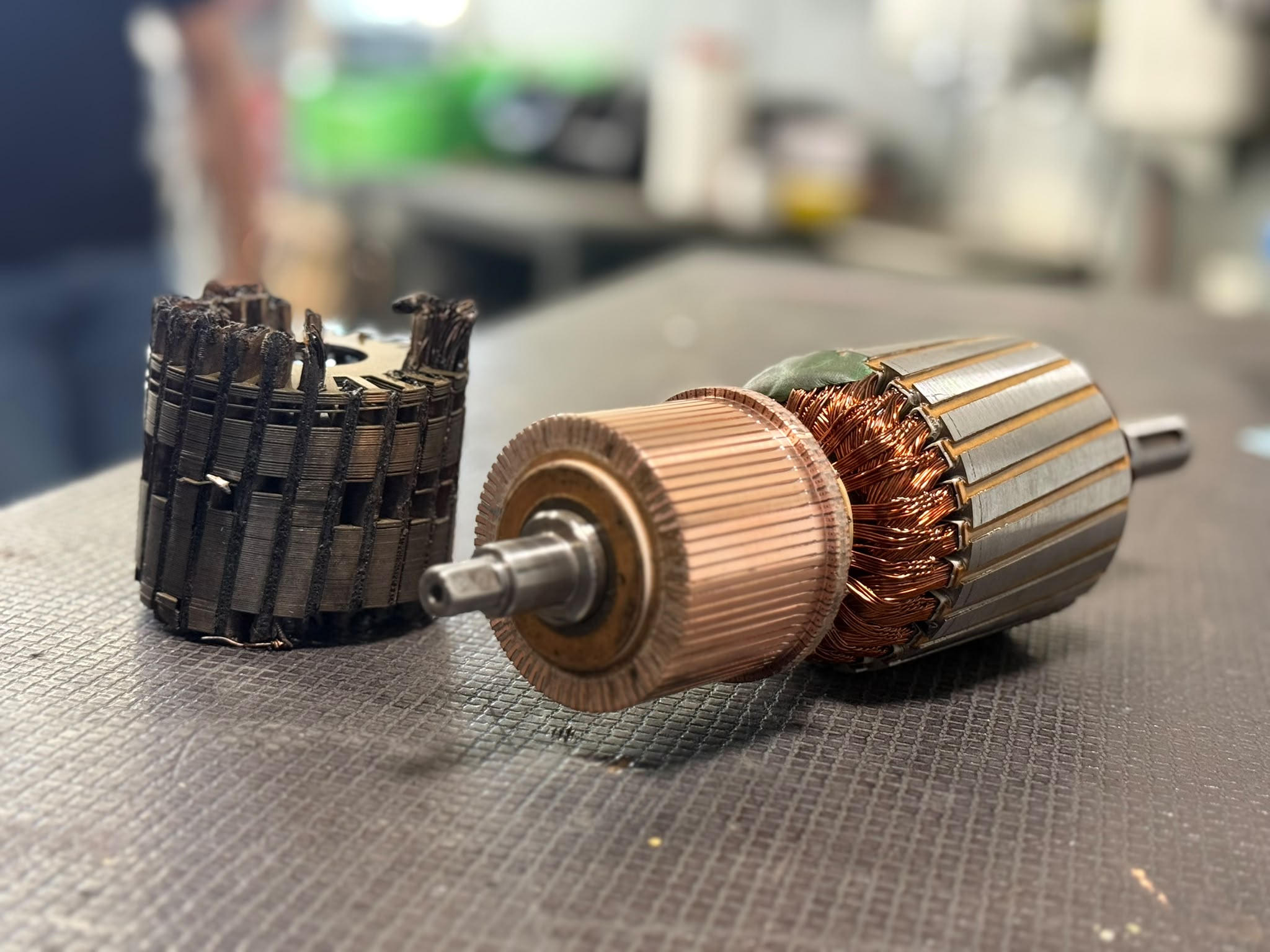
Only the shaft and commutator remain from the original rotor. Everything else is new or refurbished.
The second motor
After the pickup, the customer informed us that they had another motor of the same design and age in their plant.
They decided to send it in preventatively. We removed the magnets and re-glued them before the same thing could happen.
This is a significantly cheaper procedure than the first one. The machine was in the workshop for a shorter time, and there was no unplanned downtime.
Key takeaways
With permanent magnet DC motors, attention is usually focused on the windings, brushes, and bearings. The adhesive bond holding the magnets in the stator is not part of any regular inspection and cannot be checked without disassembling the motor.
For machines that have been in operation for twenty years or more, it is worth knowing that this bond exists and that it ages. Especially if there are several identical motors of the same age in the plant. What fails on one is at the same stage of its life cycle on the others.
Frequently asked questions
Can a rotor with a burnt-out winding still be refurbished?
Often, yes. The winding and laminations are replaceable, and if necessary, the entire stack. The feasibility of refurbishment is primarily determined by the condition of the shaft and commutator. We assess this before work begins.
Do the magnets need to be replaced during such a procedure?
Not necessarily. In this case, the magnets were undamaged and we reused them. The adhesive bond failed, not the magnet.
What about a machine that is still working?
Magnets can be removed and re-glued preventatively. The procedure is faster and cheaper than a repair after a failure.
What is the warranty?
12 months on the rewinding.
Inquiry
We refurbish rotors and rewind windings for service centers and maintenance departments across Europe. Send photos of the part and the nameplate data for an estimate.
info@matris.eu, +386 4 29 26 900