


The Path to Quality Servo Motor Service
Most service workshops can replace bearings in a servo motor. A smaller number can test and calibrate the encoder. Even fewer can map the rotor’s magnetic field, remagnetize degraded magnets, manufacture new ones, or completely rebuild the rotor from scratch. The difference between these capabilities is greater than most people outside the industry even imagine—and it directly affects whether a serviced motor truly returns to full performance or quietly operates below expectations until it fails again.
In this article, we describe what quality servo motor service actually entails, why each phase is important, and where the real technical complexity lies.
Why Servo Motors Require a Special Level of Care
Servo motors are not general industrial motors. They operate as part of a closed-loop system—constantly receiving feedback from the encoder and continuously adjusting position, speed, and torque according to commands from the drive and controller. They are expected to deliver a level of precision that most other types of motors simply do not achieve.
It is precisely this precision that makes them unforgiving during service. A standard asynchronous motor can tolerate a certain degree of imprecision in repair and still operate satisfactorily. A servo motor in a CNC machining center or robotic arm cannot. The machine it drives is only as precise as the motor—any compromise in service directly affects machine performance.
Bearings: The Most Common Cause of Failure
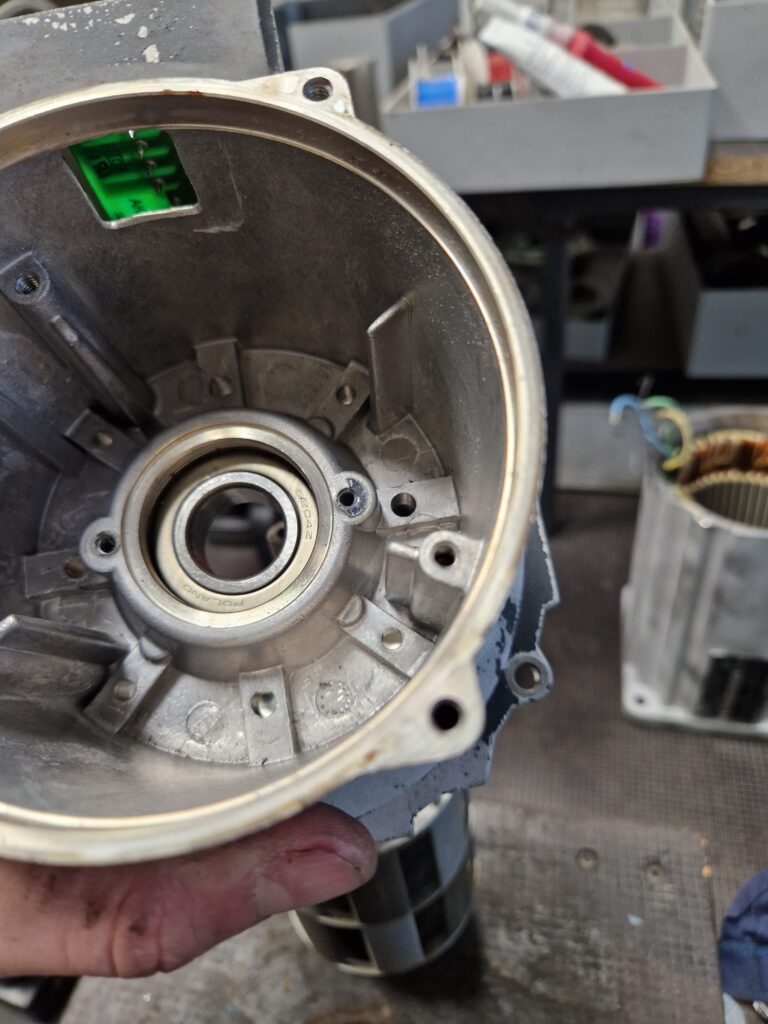
Most servo motor failures originate from bearings. This is not surprising—they carry the entire mechanical load of the rotor at high speeds, often in environments where heat, vibration, and contamination are constants. Over time, they wear out. Degradation is usually gradual, which is part of what makes it dangerous: by the time symptoms are obvious, significant secondary damage may have already occurred.
A chain of failures often follows a predictable pattern. Worn rotor bearings cause vibrations. These vibrations accelerate the wear of other components. Heat builds up in the windings. Positioning accuracy begins to fluctuate. Finally—often at the worst possible moment—the motor fails completely.
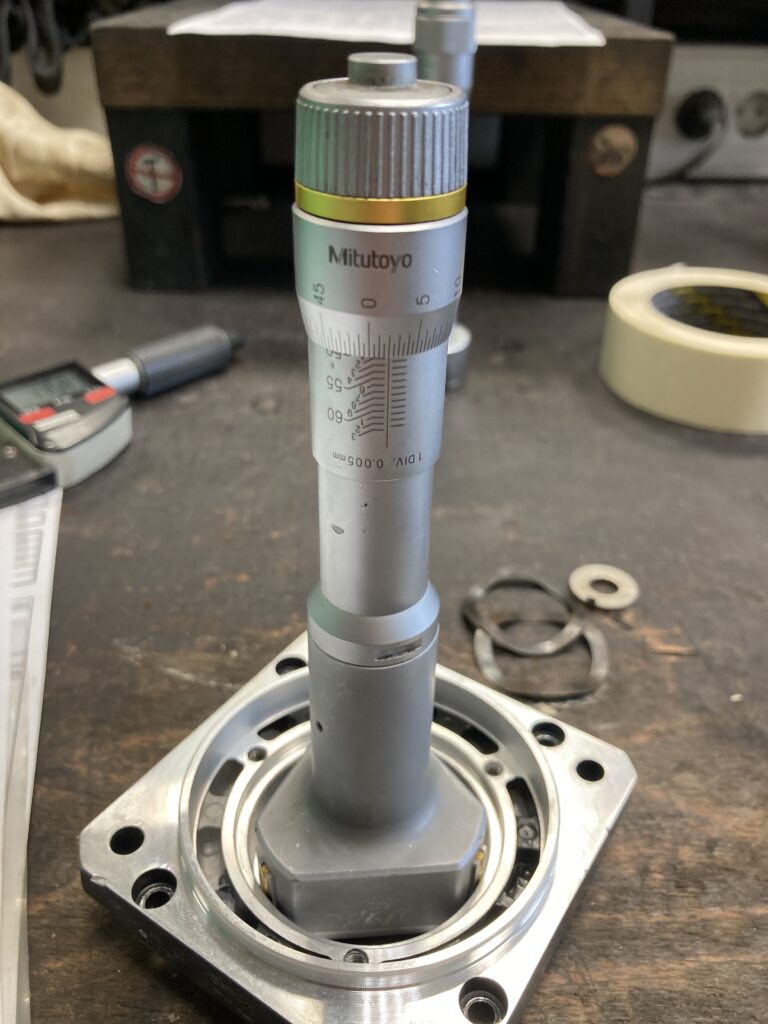
Correct bearing replacement is not merely a matter of installing new ones. Every bearing seat on the shaft and in the end shields must be precisely measured, as any deviation from the correct tolerances affects how the bearing sits, how it runs, and how long it lasts. Bearing preload—the degree of pressure applied to eliminate vibration—must be set within a specific range. Too little and the rotor still lacks support; too much and friction creates heat that shortens the bearing life. After assembly, the rotor must be balanced, as even a small imbalance that is unnoticeable at low speeds becomes a destructive force at servo motor operating speeds.
Each of these steps requires proper equipment and the knowledge to use it correctly. Workshops that skip tolerance measurements, estimate preload by eye, or fail to balance the rotor after assembly are not performing a proper repair. They are performing a partial one—and the motor will show it sooner or later.
Encoder: Three Degrees of Difference
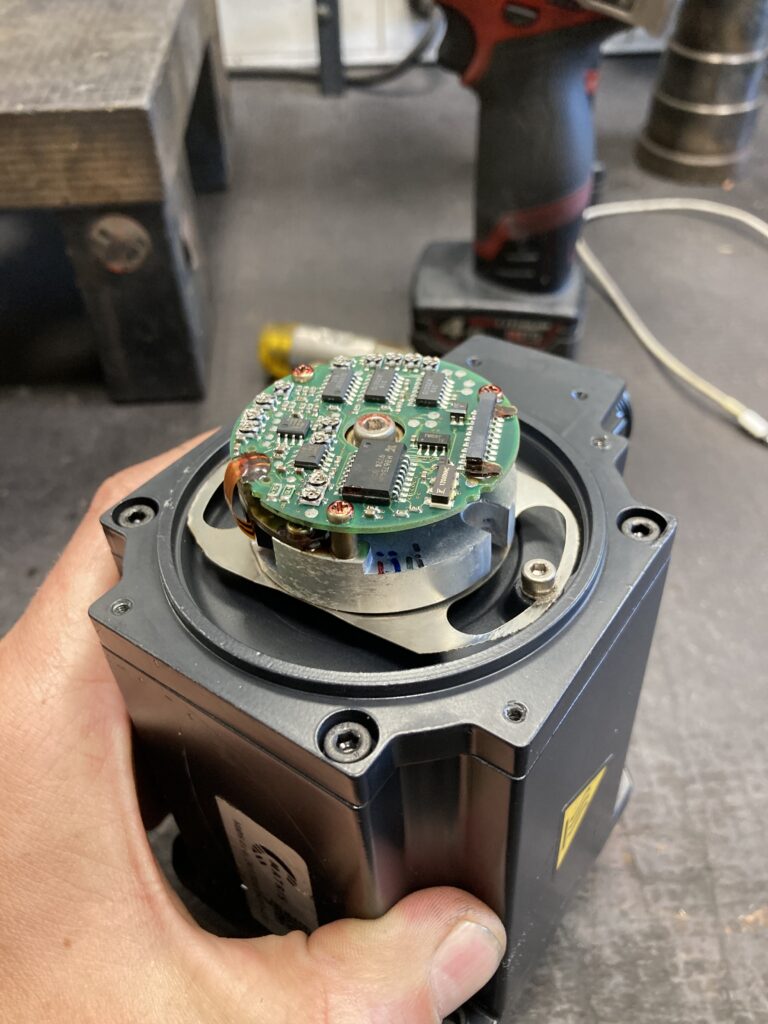
The encoder is the feedback device that makes a servo motor what it is. It continuously reports the shaft position to the drive, which uses this information to correct and control motor behavior in real time. Without accurate encoder data, the closed-loop system collapses.
It is less commonly known how small the tolerance for error is. If the encoder shifts from its factory-set position by as little as three mechanical degrees, the consequences are serious—the motor either refuses to start or its available torque drops to a mere fraction of its rated value. This is an almost invisible alignment error that is fully capable of halting production.
This means encoder testing and recalibration must be a standard part of every servo motor service—not an optional step reserved for cases where the motor obviously does not work properly. A motor that has undergone bearing replacement and mechanical refurbishment but whose encoder has not been properly verified is a motor that may still not operate correctly when returned to the machine.
Proper encoder work requires both the right equipment and in-depth understanding of the motor’s interaction with the corresponding drive. This is one of the areas where experience counts as much as tools.
Windings: An Overlooked Element
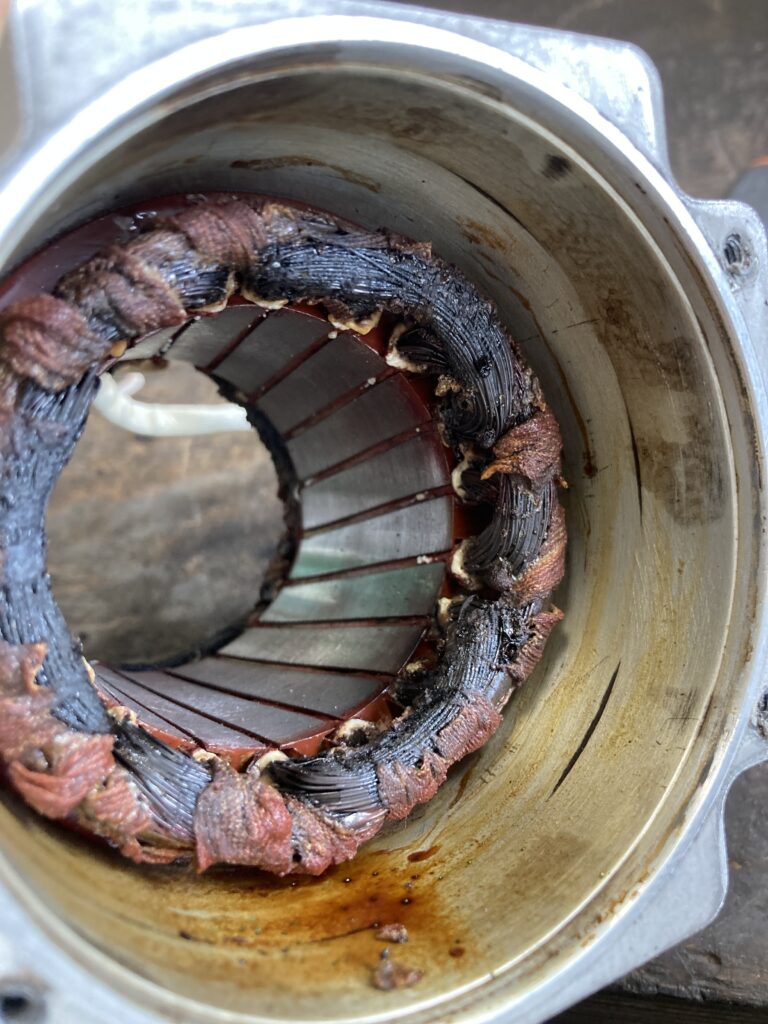
While bearings and encoders receive the most attention in servo motor service, the windings are equally critical to long-term reliability—and the element most often underestimated in superficial repairs.
Winding insulation degrades over time. Thermal cycling, moisture ingress, vibration, and electrical stress all contribute to the gradual breakdown of insulation material between winding conductors. Windings that appear undamaged upon visual inspection may have compromised insulation that will cause phase-to-phase contact under load—precisely the kind of failure that is difficult to predict and costly when it occurs mid-production.
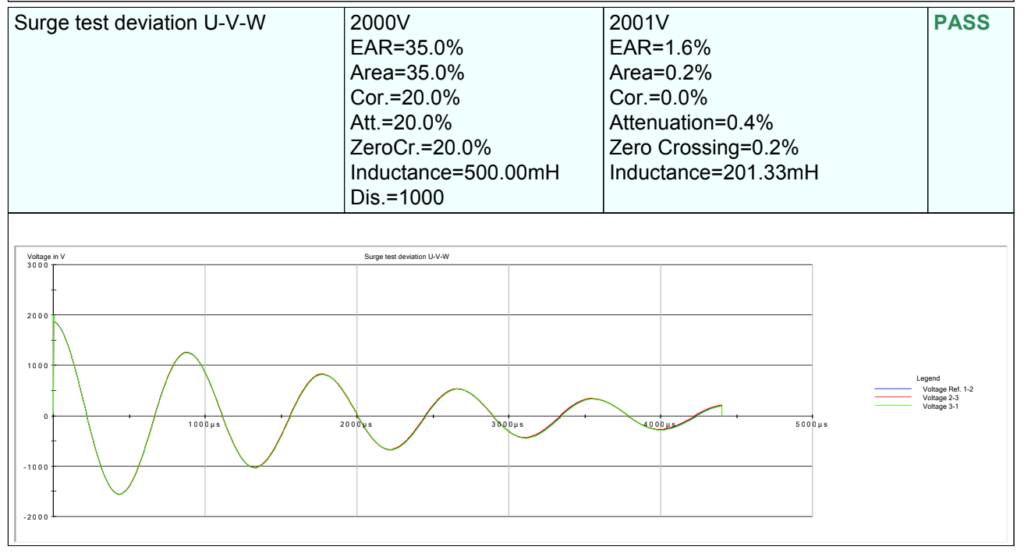
Thorough service includes measuring winding resistance, testing insulation integrity with appropriate equipment, and—where windings show signs of degradation—impregnation with suitable varnish to consolidate conductors and restore the protective barrier. This final step is often omitted by workshops focused solely on the mechanical side of repair. The difference may not be immediately visible, but it shows in motor lifespan.
Rotor Magnets: The Most Demanding Part of the Work
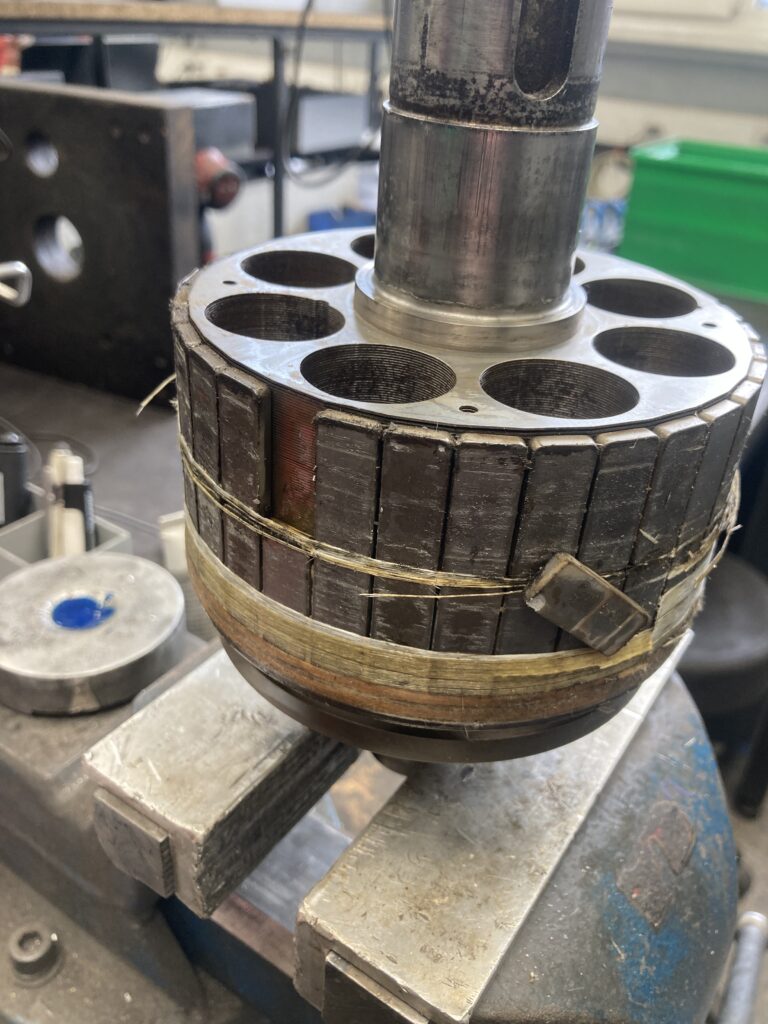
In permanent magnet synchronous servo motors—which represent the majority of modern servo motors in industrial use—the rotor carries a set of permanent magnets that are fundamental to how the motor produces torque. These magnets are not immune to degradation. Exposure to heat, mechanical shock, and the consequences of electrical faults can weaken them over time, causing partial or uneven demagnetization.
The problem with magnet degradation is that it produces symptoms that can easily be misattributed to other causes. A motor with weakened rotor magnets will have reduced output torque, irregular dynamic response, and a drive unit that operates noticeably more stressed than it should. These are symptoms that could indicate problems with the encoder, windings, or drive—and without concrete inspection of the magnets, the true cause can remain undetected for a long time.
Proper diagnosis requires mapping the rotor’s magnetic field. This means systematically scanning field strength across the entire circumference and along the full length of the rotor, and producing a graphical representation of where the field is strong, where it is weak, and where polarity distribution deviates from what it should be. This is not a common capability. It requires dedicated equipment and expertise to correctly interpret results—and this is precisely why magnet-related failures are so often overlooked by workshops without this capability.

When analysis reveals degraded magnets, the response depends on the condition of the magnets. If the magnet geometry is intact and the demagnetization is not too severe, remagnetization is possible—restoring the magnets to their original field strength without the need for replacement. If the magnets are physically damaged, new ones are manufactured to the original specifications and bonded into place. In both cases, the banding—the structural wrap that holds the magnets on the rotor surface at high speeds—is removed as part of the process and a new one is then installed.
In the worst cases, when the rotor is beyond partial repair, it can be completely rebuilt from scratch. New magnets are manufactured, properly magnetized, bonded to the rotor body, and wrapped with new bandage. The result is a rotor that meets original specification—for a fraction of the cost of a new motor. This is a level of capability offered by very few service providers, and it transforms what can be salvaged. Motors that would otherwise be written off can be restored to full operation.
Gearbox: Often Overlooked but Critical to the System
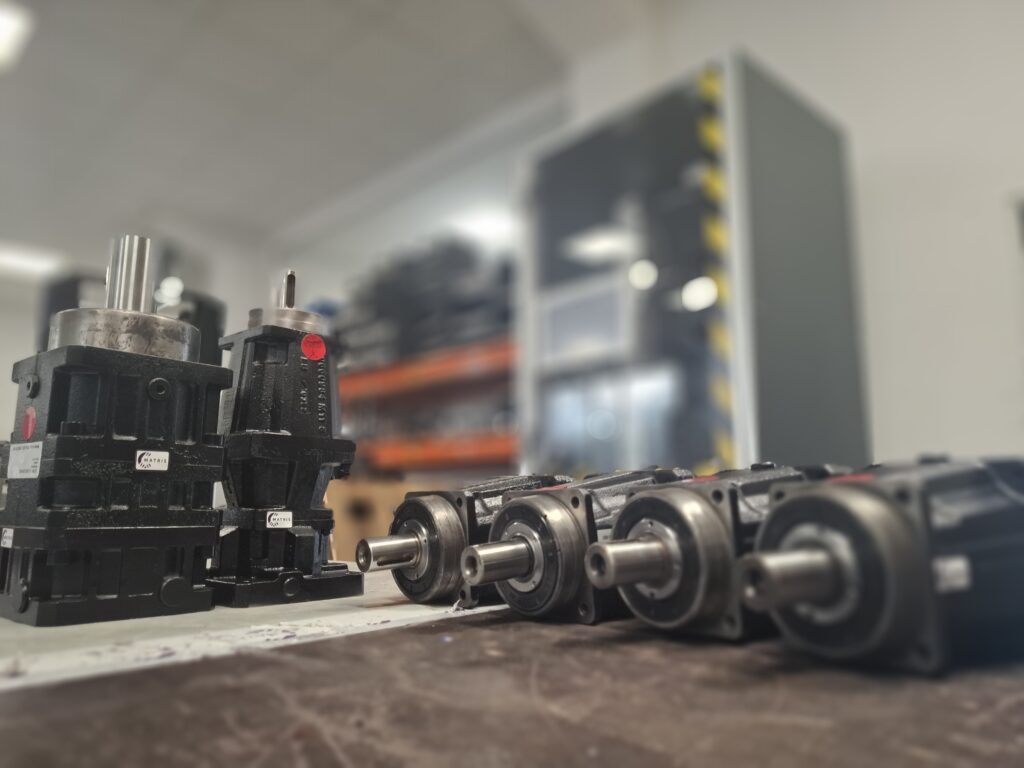
A servo motor often does not work alone. In many applications—robotic joints, positioning systems, automated lines—it is directly connected to a gearbox that adapts speed and torque for the specific task. When the motor comes in for service, it often comes together with the gearbox. And this is where many stop.
Gearbox servicing is demanding for several reasons. Tolerances are extremely tight—gears and bearings must sit with uncompromising precision, as any play or incorrect preload causes vibration, increased noise, and accelerated wear. Furthermore, gearbox servicing requires a thorough knowledge of gear systems, appropriate tools for measuring teeth and axes, and the ability to correctly reassemble the unit with the proper lubricants and preloads. An incorrectly assembled gearbox will strain the servo motor in ways that are not immediately visible but result in a shorter lifespan and reduced accuracy of the entire system.
This is why it makes sense to treat servo motor and gearbox service together—not as two separate tasks, but as one intervention on a system that operates as a whole. Only this way can it be ensured that after returning to operation, everything will work in coordination and within specifications.
Testing and Commissioning: Final Verification
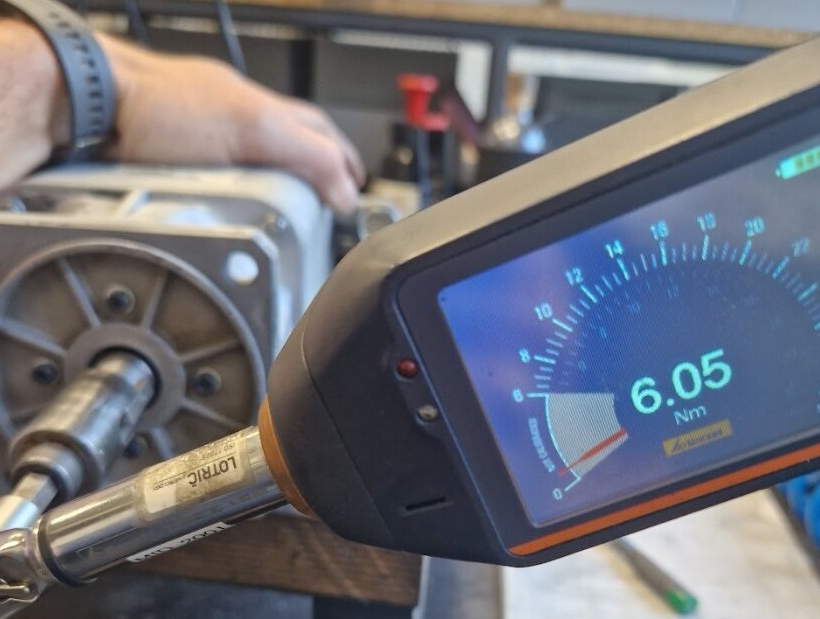
Mechanical and electrical work alone do not complete servo motor service. Because the motor operates as part of a system, it must be verified as a system before leaving the workshop.
This means running the motor under controlled conditions and verifying that it behaves correctly—that vibrations are within allowable limits, that the encoder gives accurate output at different speeds, that temperature under load remains within the expected range. Only when these checks are completed can it be confidently stated that the motor will truly operate to specification when returned to the machine.
At the end of the process, a comprehensive service report is produced, documenting the findings, the work performed, and the test results. This allows the machine operator to understand the motor’s condition and plan future maintenance accordingly.
The True Cost of Compromises
A poorly serviced servo motor does not always fail immediately. This is part of what makes inadequate work difficult to detect and easy to overlook. More often, the motor returns to operation and works—but not quite as it should. Positioning accuracy shifts slightly. Surface quality of machined parts is inconsistent. Cycle times lengthen as the drive compensates for feedback it does not fully trust. The machine continues to operate, but not at the level it is capable of.
By the time the true cause is traced back to motor service, weeks or months may have passed. Parts have been scrapped. Adjustments have been made elsewhere in the system to compensate. The costs of inadequate service have multiplied several times over.
Quality servo motor service—one that covers every element from bearings and encoder to winding integrity and rotor magnets—is slower and more demanding than a quick mechanical inspection. But only such service truly returns the motor to the state in which it was designed to operate, and only such service justifies returning it to a precision machine with confidence.
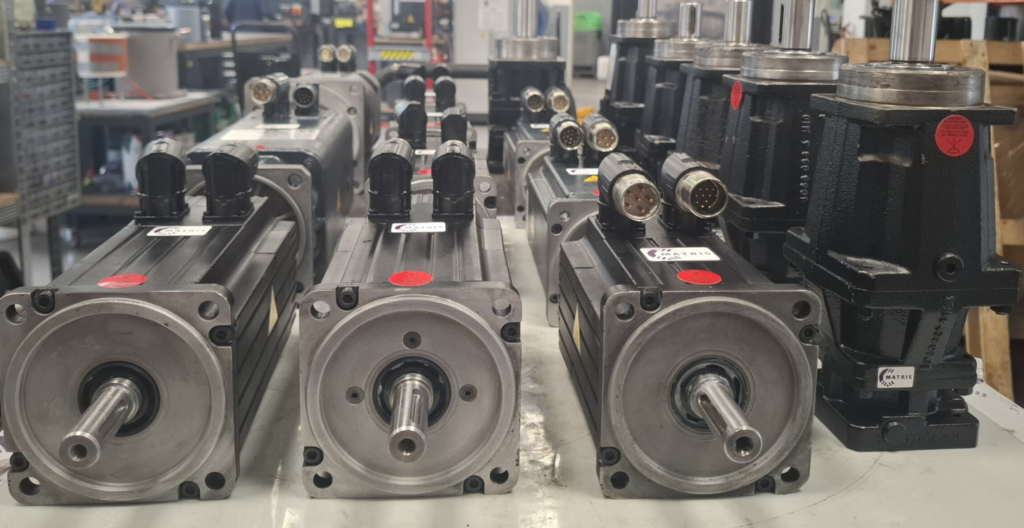
At Matris, servo motor service covers the full scope: encoder calibration and verification, precise bearing replacement, winding impregnation, rotor balancing, magnetic field mapping, magnet remagnetization, new magnet manufacturing, and complete rotor rebuilding as needed. Every service is completed with a test run and documented service report.
If you are experiencing servo motor issues or wish to discuss a preventive maintenance program, contact us.
📩 info@matris.eu | 📞 +386 4 29 26 900