


A drive unit typically arrives at our facility disassembled, accompanied by an account that almost invariably began with the electronics. The vehicle flagged an error, someone scanned the controller, and suspicion fell on the inverter circuitry. On the winding bench, however, a very different picture emerges: the stator has been submerged in coolant.
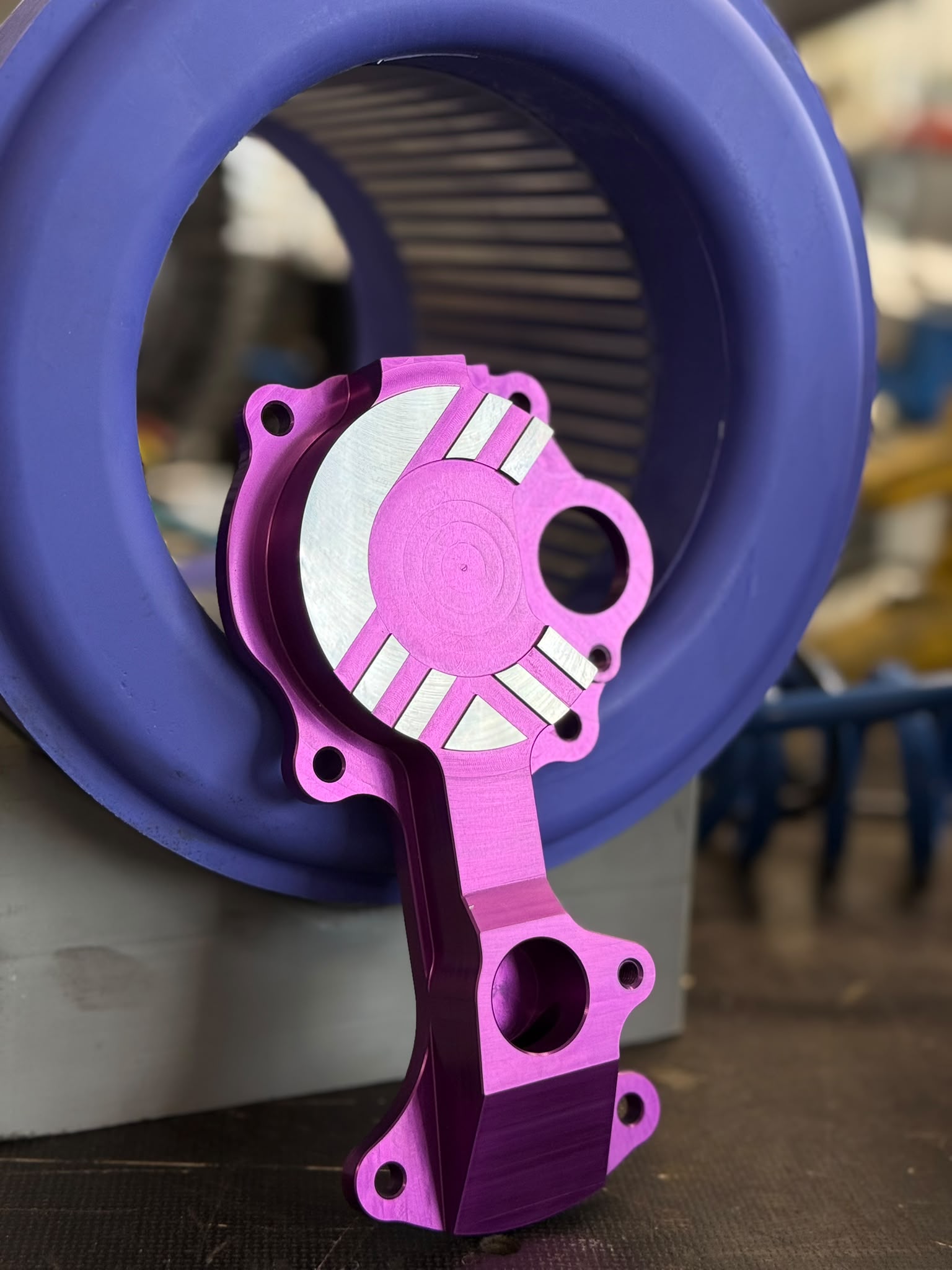
A part that blanks off the cooling circuit through the rotor.
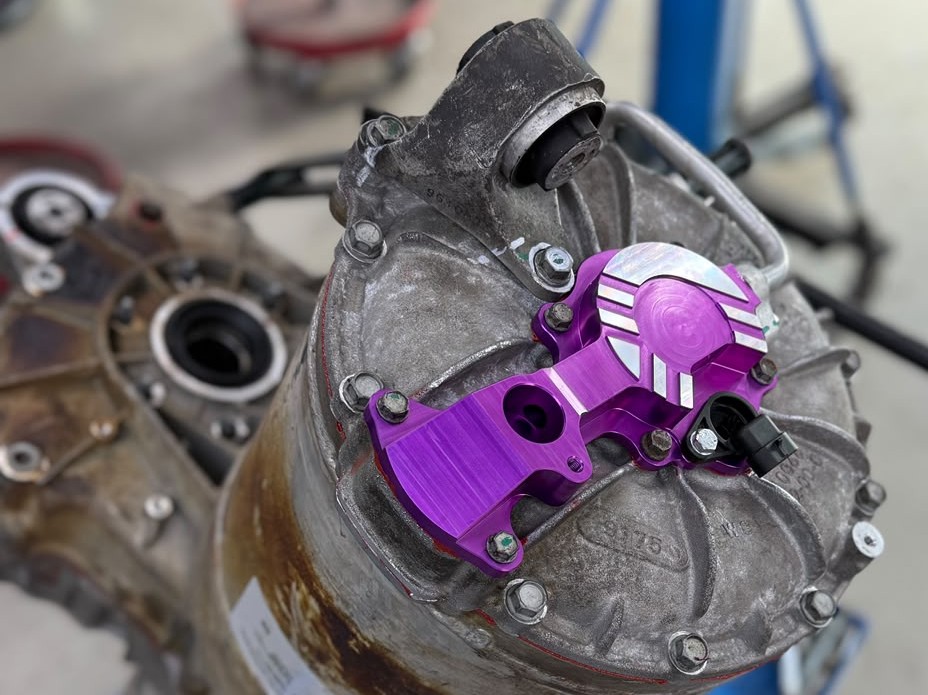
The same part bolted to a Tesla Large Drive Unit.
How coolant reaches the windingThe Large Drive Unit—installed in Model S vehicles between 2012 and 2020 and in Model X between 2016 and 2021—is an induction machine. Cooling is not confined solely to the jacket surrounding the stator; part of the cooling circuit runs directly through the rotor.As long as the internal seal holds, this design operates without issue. Once it fails, the coolant has nowhere to go except into the interior of the motor—straight into the winding.
What is revealed on the windingThis is not an issue solved by simply drying out the motor. What we measure is a severe drop in insulation resistance—and following dehydration, that value never recovers to a level anyone could rely on. The insulation system has suffered direct coolant contamination, and that damage cannot be undone.Consequently, for a stator in this condition, we do not discuss repairing the existing winding, but executing a full rewind.
The winding is where the failure becomes evident. It is not necessarily where it originated.
Why initial diagnostics point to the electronics
When insulation breaks down, the symptom presents externally as an inverter or drive error. The controller reports what it detects, which is typically an issue on its own side. As a result, many drive units are replaced or written off before anyone inspects the stator.
That distinction matters, because the stator is precisely the component that can be rebuilt. Rewinding Tesla Large Drive Units remains a viable path forward—even when electrical measurements on the vehicle are ambiguous.
What can be measured—and what we do not promise
- New copper winding
- Epoxy encapsulation across the entire stator, not merely over the winding heads
- Insulation resistance testing prior to dispatch, with documented test reports included
- No-load motor run test
- Limited lifetime warranty on rewound Tesla LDU stators
We do not perform testing under full load, nor do we state otherwise. What we can document with complete transparency is the measured insulation integrity.
Two paths forward
Once the stator has been rewound, the question remains: what should be done with the path through which the coolant entered? The unit can be reassembled to its original factory configuration, retaining the rotor cooling circuit. Alternatively, that circuit can be blanked off—eliminating the rotor cooling passage and leaving all heat dissipation to the stator jacket.
The second option is resolved via a coolant delete. We manufacture this component in-house and keep it in stock.
As to how eliminating this passage affects operating temperature, we make no definitive claims, as we have not measured it.
Frequently asked questions
Drying does not restore insulation resistance to an acceptable, dependable value. A stator that has experienced coolant ingress must be rewound.
Once the old winding is removed, distinct residue and staining remain visible on the stator lamination and inside the housing. Every stator is measured and photographed prior to stripping.
It is not. That is a decision for the workshop or the owner. We manufacture and supply the delete component; however, we make no empirical claims regarding its impact on sustained operating temperatures, as we have not measured this.
Rewinding of Tesla LDU stators is backed by a limited lifetime warranty. All other rewinding services carry a standard 12-month warranty.
Dealing with a drive unit with inconclusive diagnostic readings?
The stator can be rewound rather than replaced or scrapped.